What makes a remote purchase possible
Paraguayan law requires no residency, no cedula and no physical presence to buy: a valid passport is enough, and the notary can record your passport details directly in the deed. The overall path is the same as any purchase, and we break it down step by step in our guide to the property purchase process in Paraguay. The whole difference comes down to a single legal tool: the power of attorney.
Signed before a notary in your country, then apostilled
Reservation transfer, SEPRELAD check, titles verified
Sales contract signed digitally, down payment by transfer
Deed, registration and key handover, with no travel
The power of attorney (poder): your legal presence on the ground
The poder is a notarized mandate that lets a trusted person sign in your name in Paraguay wherever your physical presence would otherwise be required: mainly the notarial deed (escritura) on handover day, and certain administrative steps. The sales contract itself can be signed remotely and digitally, with no intermediary. You sign the poder before a notary in your country of residence, then have it apostilled (the Hague Convention formality that makes the document valid in Paraguay). An official Spanish translation may be requested depending on the document.
Two reflexes protect your interests. First, a precise scope: the text must state exactly what your representative can do, for which property, and nothing more. Second, the right drafter: the power of attorney must be drawn up by a notary in your home country, then certified by an escribania here in Paraguay.
Reserving and paying from abroad
The reservation is made by bank transfer to the developer's account, with a deposit usually around 1,000 USD depending on the developer and the project. The unit is locked as soon as the transfer receipt arrives: the time zone does not matter, the transfer does. We only work with developers we have selected ourselves, and we pass their exact banking details straight to you: you transfer with confidence, knowing precisely where your money goes.
On top of that comes the anti-money-laundering check on the origin of your funds with the SEPRELAD agency, one to three weeks depending on the project. From abroad, this check is your main scheduling constraint: prepare your supporting documents early (savings, sale of an asset, income), and the rest follows.
Signing the contract without being there
Once the checks are cleared, you sign the sales contract yourself, remotely and digitally: an electronic signature and an exchange of scanned documents are enough, with no intermediary in between. The down payment, in practice around 20% of the price, goes out by international transfer. Unit, price and payment schedule are fixed in the contract, which you review and approve through a secure exchange before signing. You stay the decision-maker from start to finish.
Following the site from 10,000 kilometres away
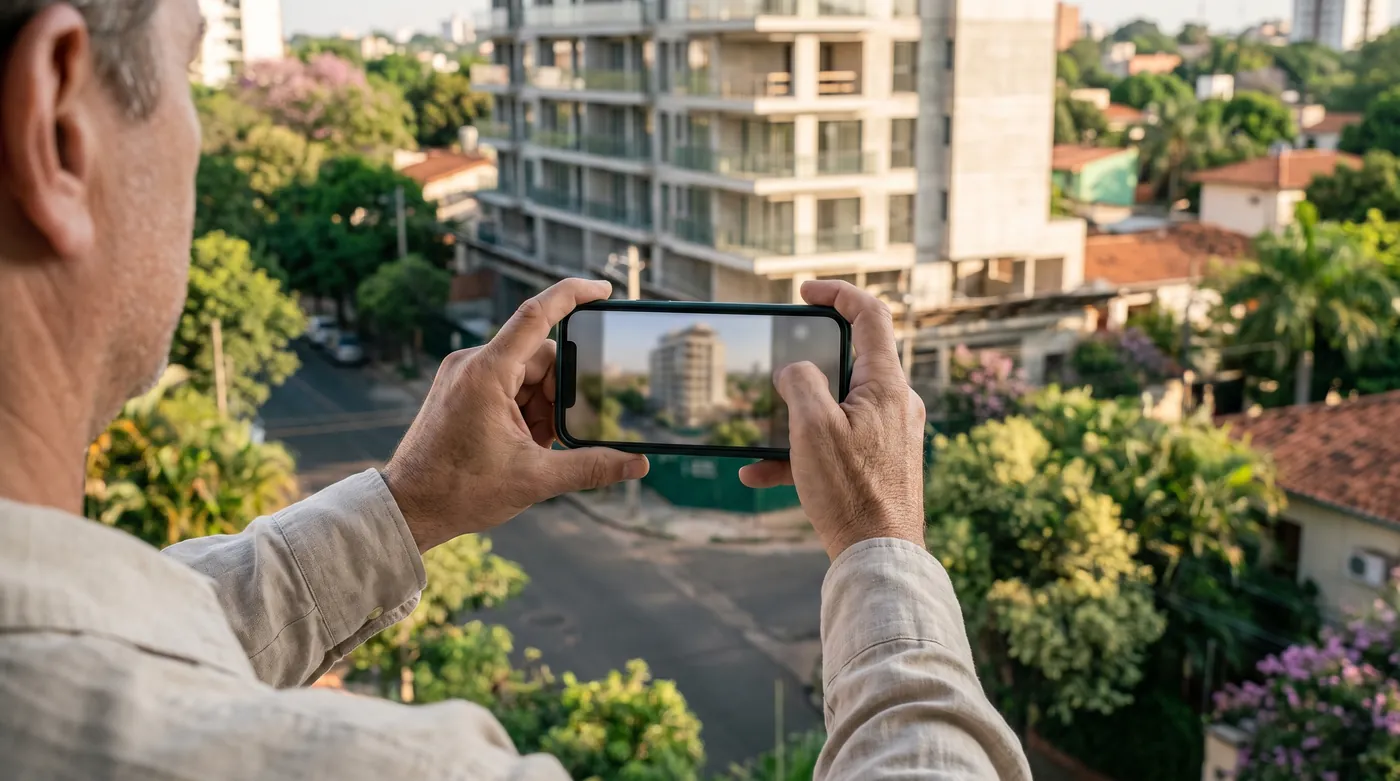
This is where a remote purchase is won or lost. Between signing and handover, you need concrete proof of progress, not just 3D renders. On our side, we support you on the contract, answer your questions and negotiate with the developer when it helps.
On the construction side, insist on dated, photographed progress reports at regular intervals: it is the developer's job to provide them first, and a serious developer does so without being chased. A prolonged silence is a signal. If you wish, you can also appoint someone on site for occasional checks.
Handover, deed and title: still without travelling
At handover, the notarial deed (escritura) is signed before the escribano, by you if you have chosen to come, by your representative otherwise. Budget closing costs of around 3% of the price. The final title deed is generally issued about a year after handover: these are the municipality's standard administrative timelines. The keys can be handed straight to your rental manager if the property is going on the rental market.
Do you still need to come?
To buy: no, nothing requires it. In practice, many of our clients choose to come once, often around handover, to see their property and the country. And if your project includes a residency application, the picture changes: immigration steps do call for short stays on site. That is a separate topic from the purchase, and it deserves its own guide.
The classic pitfalls of buying remotely
Two mistakes come up regularly with buyers who go it alone.
- The overly broad power of attorney: a general mandate that authorizes everything, signed to save time. In a dispute, you carry the risk. A poder should be limited to the operation at hand.
- The wrong project chosen alone: through lack of experience and research, you pick the wrong development, developer or location. This is where a good contact on the ground makes the difference: they know the projects, vet the developer and steer you toward what genuinely holds up.
None of these precautions costs much. All of them cost a great deal when skipped.
Let's plan your project
A successful remote purchase comes down to three things: a well-drafted power of attorney, funds documented early, and the right project chosen with a trusted contact on the ground. Let's talk about organizing your project from your country of residence: we are an English-speaking team based in Asuncion, and we coordinate the whole thing, from the poder to the handover of keys.
This article is provided for general information only and does not constitute legal advice. Documentary requirements (power of attorney, apostille, translations) vary from case to case: always confirm the exact terms with a licensed Paraguayan notary before starting the process.