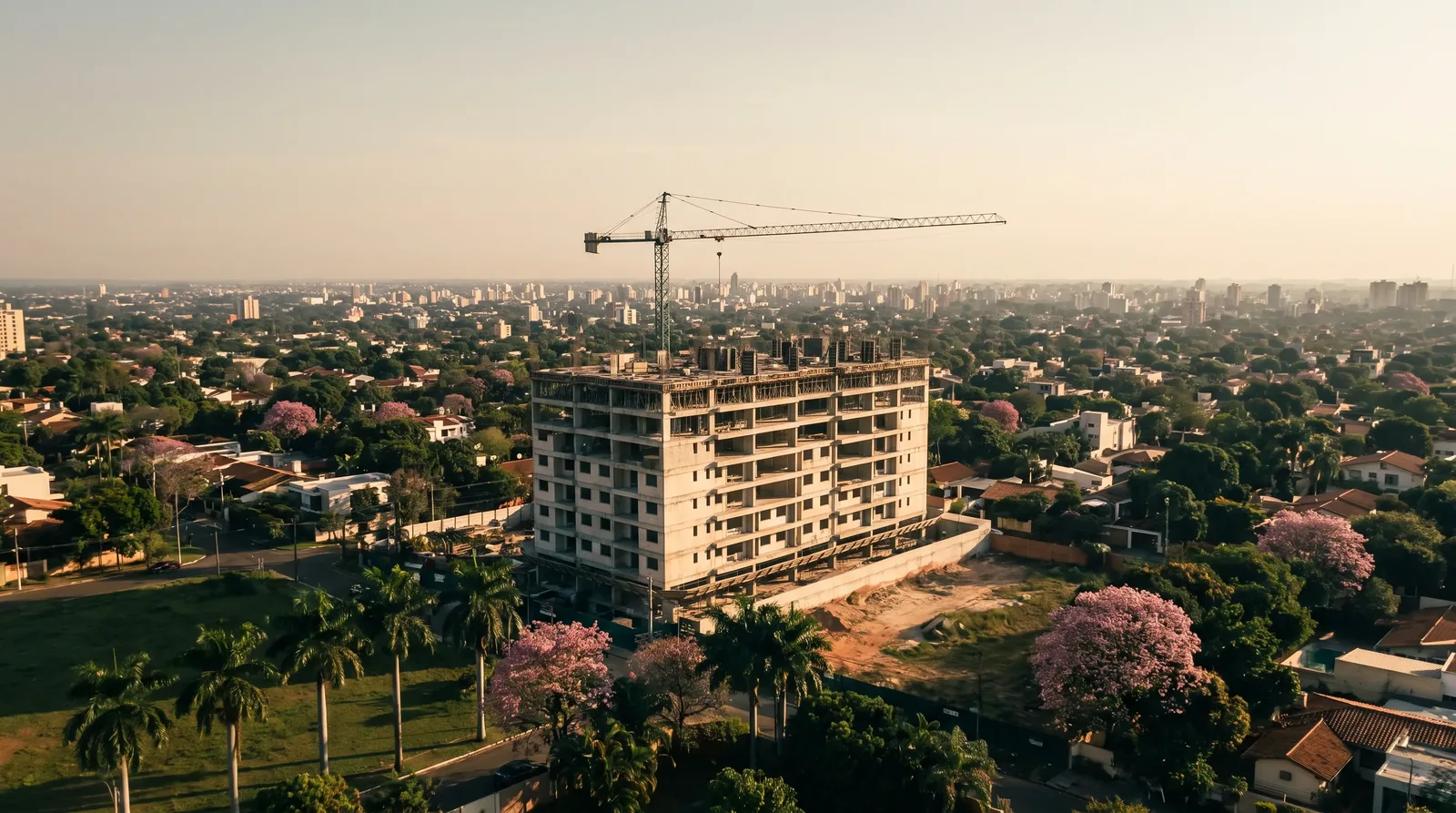
Let's start with the market truth: there is no local bank mortgage for a non-resident in Paraguay. If you are waiting for a bank in Asuncion to finance 80% of your purchase the way a mortgage does back home, you will wait a long time. The real financing route, the one most of our clients use, is the developer's installment plan: a schedule spread across construction, interest-free, with no bank file. Here is how it works, with a real example.
Local bank credit: the narrow door
Paraguayan banks lend to residents who can show local income. A foreign investor with no residency and no income in Paraguay does not fit their criteria, and the rare exceptions come with terms that strip the deal of any appeal. This is not a temporary quirk, it is how the market is built. One nuance: after roughly two years of living in Paraguay with genuine local economic activity (a bank account, movement on it, local income), a settled foreigner can qualify for local financing. But the rates charged here stay relatively high, which makes the option unattractive in practice.
Practical consequence: foreign buyers pay cash, or lean on the developer's payment plan. That second option is worth a closer look, because it changes the entry equation.
Developer financing: how it really works
On an off-plan purchase, the developer does not expect the full price at signing. Payment follows the progress of the project: a deposit at the start, installments spread across construction, a balance at or after delivery. No bank in the loop, no interest, no credit file: your purchase contract acts as the payment schedule.
This mechanism only exists on new builds under construction. For a property already delivered, the financing question closes: it is a cash purchase, and the trade-off is more about off-plan versus ready to rent.
A real example: the 20 / 70 / 10 schedule
The CIVIS projects we distribute use a simple three-step payment structure: a 20% deposit at signing, 70% spread across construction, and the remaining 10% after delivery, all paired with interest-free financing over 24 to 36 months.
Deposit that locks the unit and fixes the price
Interest-free installments, over 24 to 36 months depending on the project
Balance
Every developer has its variants: the deposit percentage, the pace of installments and how the balance is handled change from one project to the next. The principle stays the same: you pay for the property while it is being built, not before.
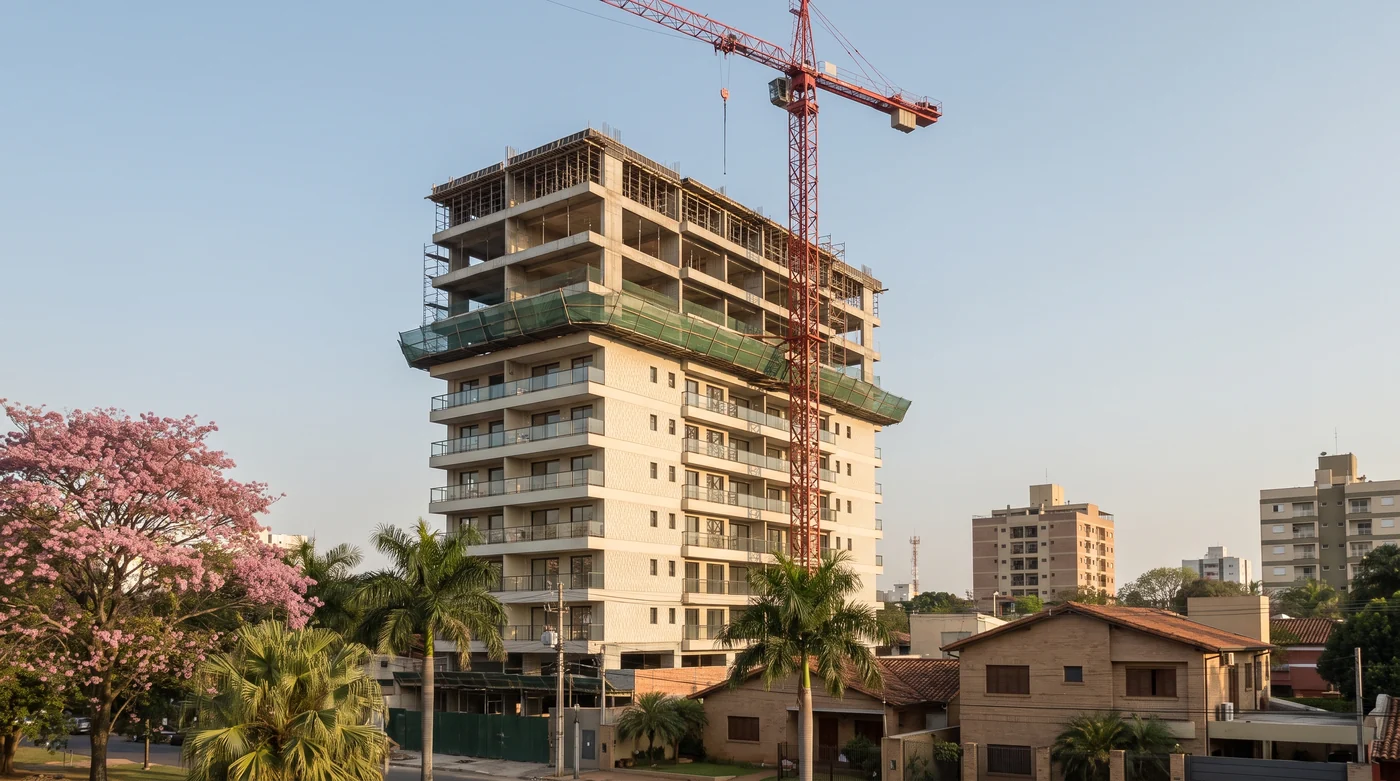
What it changes for your cash flow
Interest-free spreading has three concrete effects.
First, the entry ticket. Off-plan programs start around 36,000 EUR with some developers: with a 20% deposit, the initial commitment is counted in thousands of euros, not tens of thousands.
Then, the cost of credit: there is none. Every euro you pay goes into the property, none of it goes to interest. Over 24 to 36 months, the gap with a classic loan is far from trivial.
Finally, a limit worth naming: without a bank, there is no leverage. Your return is calculated on your own funds, in full. It is a more sober model, suited to those who want to spread their effort, not multiply it.
That said, off-plan has its own leverage, different from credit. You often enter around 30% below the market price at delivery, and the property keeps appreciating throughout the build. In practice, you can resell once construction is well advanced and unlock a solid capital gain, without even having paid 100% of the price. This off-plan resale strategy (flipping) is currently one of the most effective ways to grow your capital quickly.
The questions to ask before you sign
Developer financing rests on a single player: the developer. Hence four questions to ask systematically, contract in hand.
- What does the contract provide in case of a delivery delay? Some developers include compensation per business day of delay, it is not universal.
- Can you assign your contract before delivery if your plans change? In many cases yes, subject to the developer's agreement and possible transfer fees.
- What happens if you suspend your payments? Penalties and exit terms vary widely.
- Is the payment schedule annexed to the contract, in black and white? It should be.
The developer's delivery track record weighs more than any clause: it is the first filter we apply before listing a project.
Paying from abroad: transfers and compliance
Payments are made by international transfer to the developer's account, from your usual bank. Only one compliance step is added: the anti-money-laundering check on the origin of the funds by the SEPRELAD body, which takes one to three weeks depending on the project. Prepare your supporting documents (sale of a property, savings, income) from the start and you will save that delay. The full step-by-step sequence is described in our guide to the property buying process in Paraguay.
What about a loan in your home country?
A third route exists, outside Paraguay: borrow at home, then pay cash here. Some of our clients refinance a property they already own in Europe, or draw on a loan backed by their savings, and arrive in Paraguay as cash buyers. The upside is twofold: you regain leverage, and you negotiate your rate inside a banking system you know. The trade-off: this setup depends entirely on your situation in your country of residence, and it is built with your local banker or broker, not with us. We mention it because it is common, not because it is simple.
Let's talk about your project
Payment schedules, delivery dates and exact terms vary from project to project, and they shift as new launches come out. Browse the programs currently open to see the financing structures available, or let's talk: we are a multilingual team based in Asuncion, and we will walk you through the real numbers of the project you have in mind.
This article is provided for general information and does not constitute financial advice. Financing terms vary by developer and project: always confirm the exact schedule and contract clauses before any commitment.